Royal Ascot Trends Analysis
For the past few months I have been looking at ten-year trends and how
they are a fantastic tool to use when it comes to looking at big races either
handicap or non-handicap.
Add in the “less is more” approach into your trends analysis and there is no
doubt in my mind that you can improve your win strike rate in these big races.
I can’t stress too much the following. “You really don’t need to be using lots
of filters. Indeed, the more filters you use the more confusing the analysis
and the less reliable the trends become”.
Indeed, if you find that you can’t narrow down the field to four or five
trends, then maybe that race isn’t one to be looking to have a bet in anyway.
The Trends Don’t’ Always Have It!
Last month I looked at two races the Chester Cup and Ascot’s Victoria Cup. Having managed to snare the Lincoln winner from the trends, it wasn’t so good in May and shows that trends are not necessarily the panacea to punting success. That said you’re betting should never be dependent on a few races over a month.
Long term profitability or lack of it can only be gauged over a much
longer period.
The Chester Cup winner Making Miracles failed two of the four trends that I
highlighted.
My four trends for the race were.
- Stall: 1 to 13
- Odds SP: 16/1 & under
- Official Rating: 93 to 101
- Last Race Code: Flat or NH
This year’s winner of the Chester Cup failed two of the above trends.
The gelding defied stall 16 to win after being given a very enterprising front
running ride from jockey Franny Norton and failed the Official Rating trend
being on a mark of 104.
The other race I put under the trend’s microscope was the Victoria Cup.
My four highlighted trends were:
- Odds SP: 25/1 & under
- Highest Class Run: Class 2 or 3
- Last Time Out Placing: First Five
- C&D Wins: 0
This year’s winner of the race was Cape Byron who passed three of the
four trends but failed on the last time out placing. He had finished 7th on his
final start of 2018.
A this point it needs stressing: That the above trends were the ones I
highlighted other punters may have focused on other trends which lead them to
finding the winner of one or both races. Although I think the Chester Cup draw stat
was a strong one. Which would have put plenty punters off horses drawn out as
wide as Making Miracles was.
Trending It’s All Personal
At this point it maybe useful to remind ourselves of some points when it
comes to ‘trending’ a big race and it will of course be useful to anyone
reading around the subject for the first time.
The key to trends analysis of big handicaps is to eliminate as many losers as
you can whilst retaining as many of the winners as you can.
As I have mentioned in the past a ‘trending’ approach is a very personal one.
In some races the age filter can be very important.
In other races it could be the number of runs a horse has had sphere.
It’s all about finding the “sweet spots” to work with. The other filters you
then use would hopefully allow you to retain 80% of the winners.
Then from the remaining shortlist of runners you can then use a more
traditional form analysis to make 1 or 2 bets in that given race. The big race
trainer filter is always worth looking at as many trainers will target certain
races with a horse with a similar profile to their previous winner(s).
Other filters that can be very useful are:
Official Rating.
Weight – Can be useful in the same regard as the OR.
Day Since Last Run – Is another that can be useful particularly in races
early or late in the season.
Runs in the Previous 90-days.
Last Time Out Placing.
As ever they are at their most useful when you have found a “sweet spot”.
Finally, it’s important to stress. Whether you decide to use a filter, you need
to consider the strike rate of that filter. For example: Looking at the age
filter. You may see that 4 and 5 year-olds have won 8 out of the last 10
renewals of a race with a win strike rate of say 25% and the other two winners
come from an age range with a combined strike rate of 5% then you can discard
the age brackets which include the two as they are 5 times less likely to win.
As I said last time, this month, I’m going to be trending two of the big
handicaps at Royal Ascot. Both are run over differing distance. The first I
will look at is the Wokingham Handicap over 6f and the Duke of Edinburgh
Handicap run over 1m 4f.
As ever the ever reliable www.horseracebase.com is my
guide when looking at the trends for big races.
I will approach this month’s races slightly different to the previous ones. By
highlighting a slightly different approach to trending.
Wokingham Handicap
The Wokingham Handicap is one of the big handicaps of the flat racing calendar. Traditionally a big betting race which normally attracts a 25+ field of sprint handicappers. The race now takes place on Day 5 of Royal Ascot.
Last years renewal was won by the Brian Meehan trained Bacchus who was returned at 33/1. A big priced winner, one returned at 14/1 & longer has won the race 4 times in the last 11 years.
Here are the stats for the last ten renewals of the race.
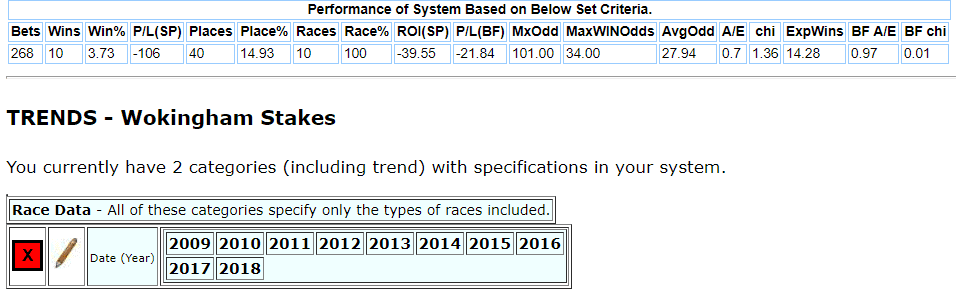
Now, I am looking to find between 3 and 5 key trends that will provide clues as to the type of horse that may win the race this year.
So, what are the key trends? Whatever the type of race, unless it’s for say 3-year-old’s only, age is this first thing I look at.
Age
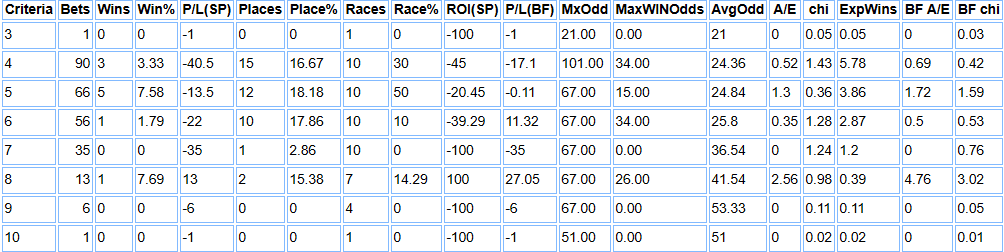
The most successful age group are 5-year-olds with 5 of the last 10 winners of the race. Whilst horses aged 6+ are 2 winners from 111 runners 13 placed.
Draw
As it’s a big field handicap over 6f I will next have look to see how the draw has impacted on the race. Rather than look at individual stalls I shall look at them by segment.

The winners have been evenly spread across the track.
Although it could be worth noting that two winners in the low numbers were drawn in stall 1 & 4 so close to the fair rail.
Last Time Out Placing
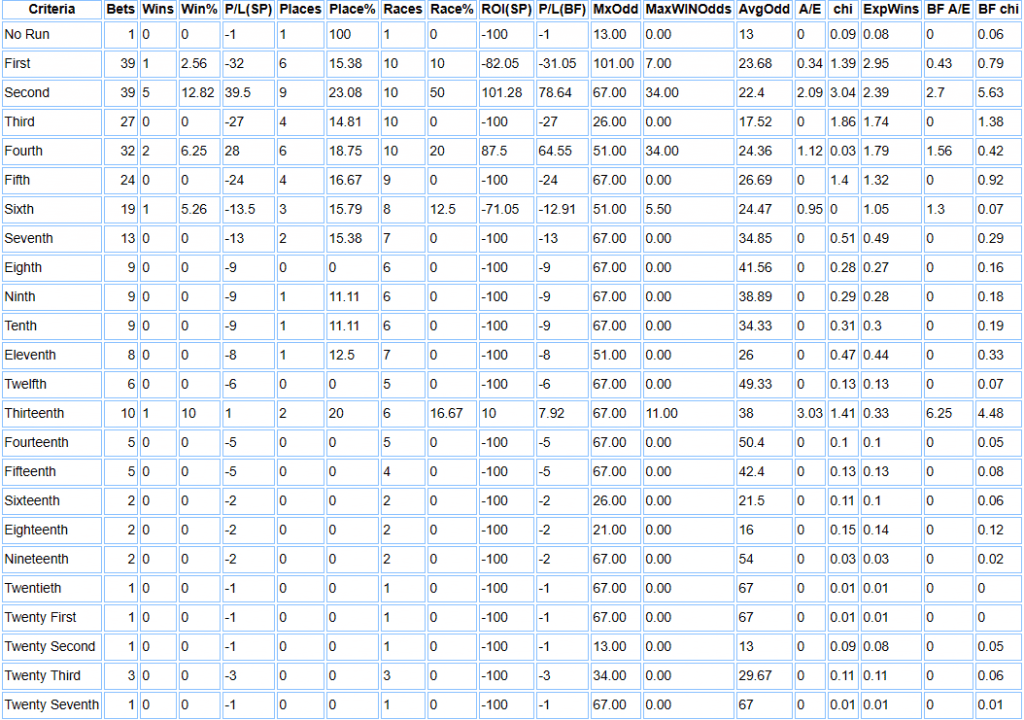
Just one last time out winner has gone to win the race in the past
decade.
Those horses who finished runner-up on their last start have provided 5
winners. Horses that finished outside the top six on their last run are 1 win
from 89 runners 7 placed.
Days Since Last Run
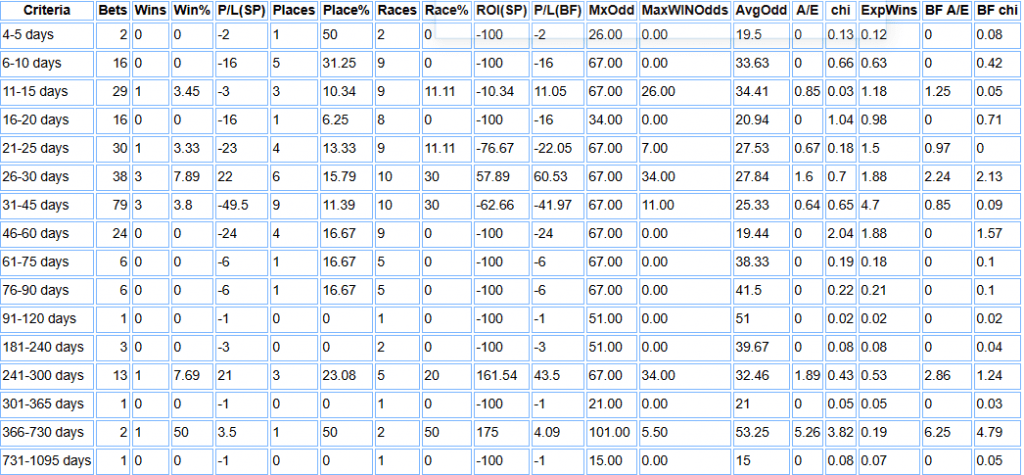
Eight of the last ten winners of the race had run within the last 45-days but they did provide 78% of the total runners. Seven of those winners ran between 21 to 45-days since their last start from 55% of the runners so, nothing to get to excited about there.
Official Rating
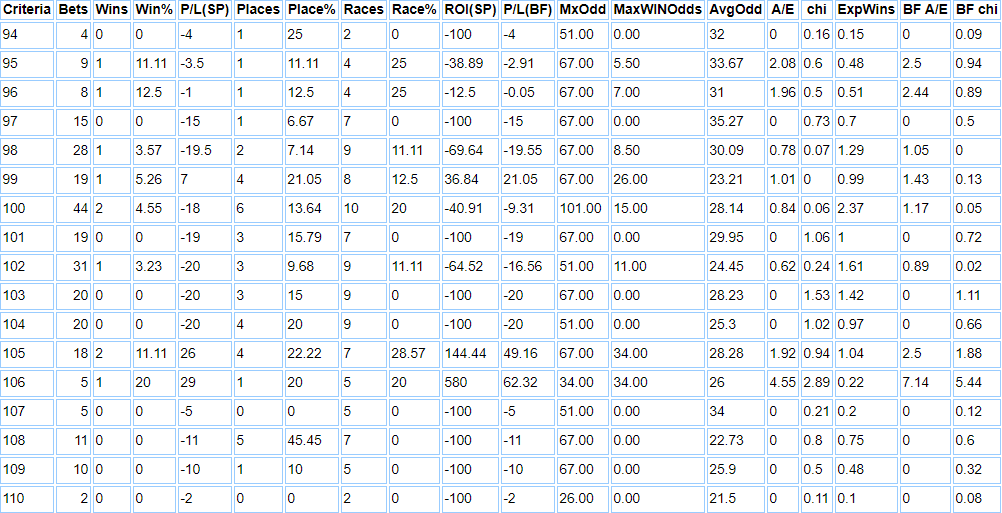
No winner in the last 10 years has won off an official rating higher
than 106. Those above that mark are 0 winners from 28 runners 6 placed.
Using the OR in conjunction with weight.
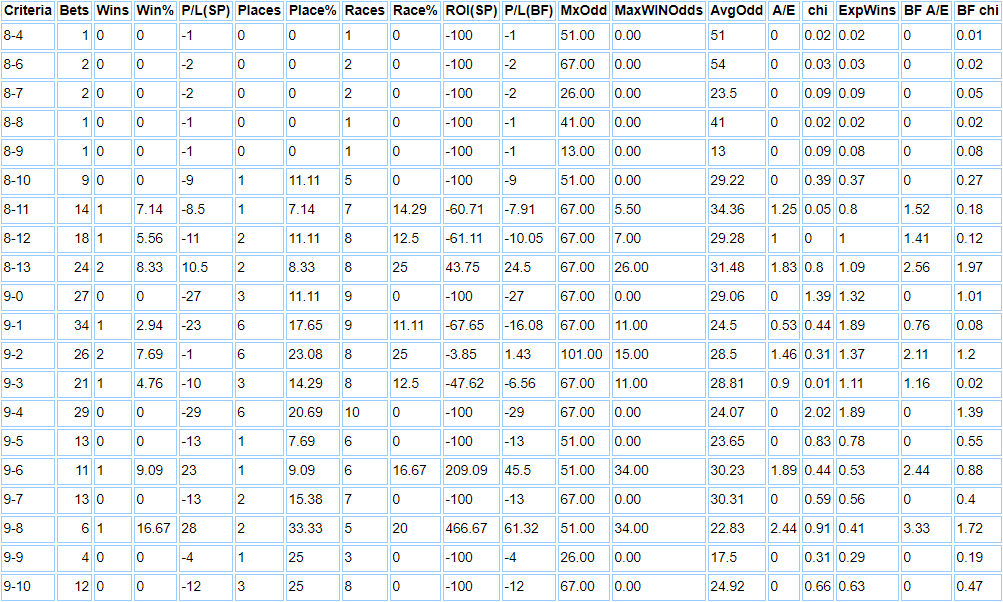
Those runners carrying 9-4 or bigger are 2 winners from 8 runners 16 placed. The Exp/Wins for that group had been 5 so the higher weighted horses have underperformed although last years winner Bacchus did carry 9-6 to victory.
Handicap Wins
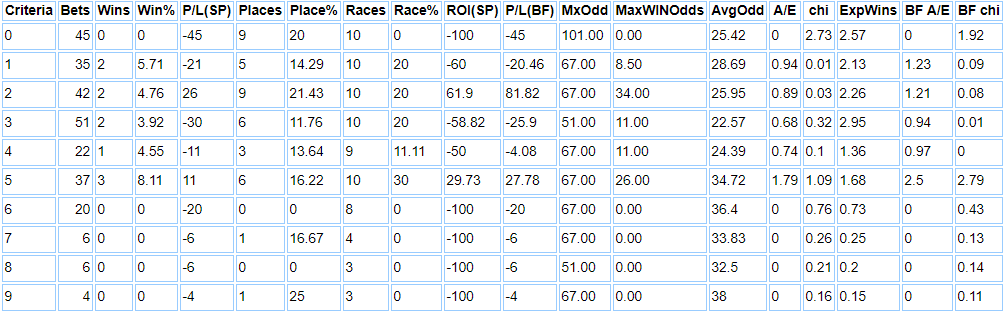
Runners yet to win a handicap haven’t registered a win in the past ten years. I think you can discard those horses and those with 6 or more wins in handicaps.
And finally, those all-important trainer records.
Trainer Records
Ten different trainers have won the race but if we look at the results from a place perspective here are the trainer with 2+ places.

Wokingham Handicap Trends Verdict
It’s a tough race to trend. Personally, I will be concentrating on the younger horse those aged 4 or 5, those with a top-four finish which has been a recurring theme in the past decade and runners that had won between 1 & 5 handicaps.
- Age: 4yo or 5yo (8 winners)
- Last Time Out Placing: First Four (8 winners)
- Draw: 21 to 30 (5 winners)
- OR: 100 to 106
- Days Since Last Run: 21 to 45 days
- Handicap Wins: 3 to 5
Looking at those six trends. I suggest that this year’s winner will need to meet 4 out of the 6 trends.
Duke of Edinburgh Handicap Stakes
A completely different race to the Wokingham. This one is run over 1m 4f on the round course. A Class 2 handicap and one of the lesser known races of the five days of Royal Ascot. The race is open to horses aged 3 years & older. Last years race was won by the David Elsworth trained Dash Of Spice who was sent off the 7/2 favourite.
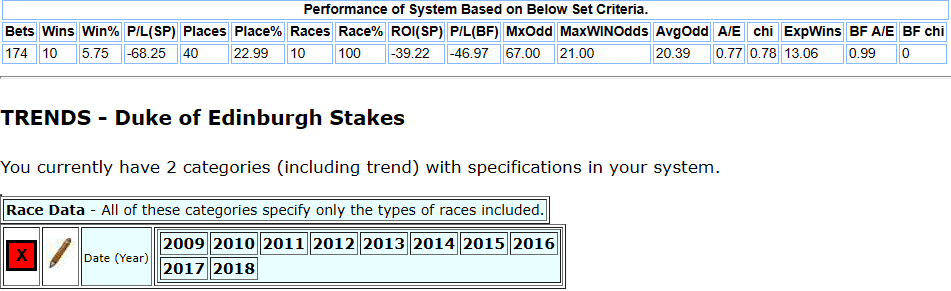
Not as many runners as the previous race but still an average of 17 have run in the past 10 years.
Age

Once again, the younger age groups have dominated the race in recent years with those aged 6yo+ being 0 winners from 39 runners 5 placed.
Draw
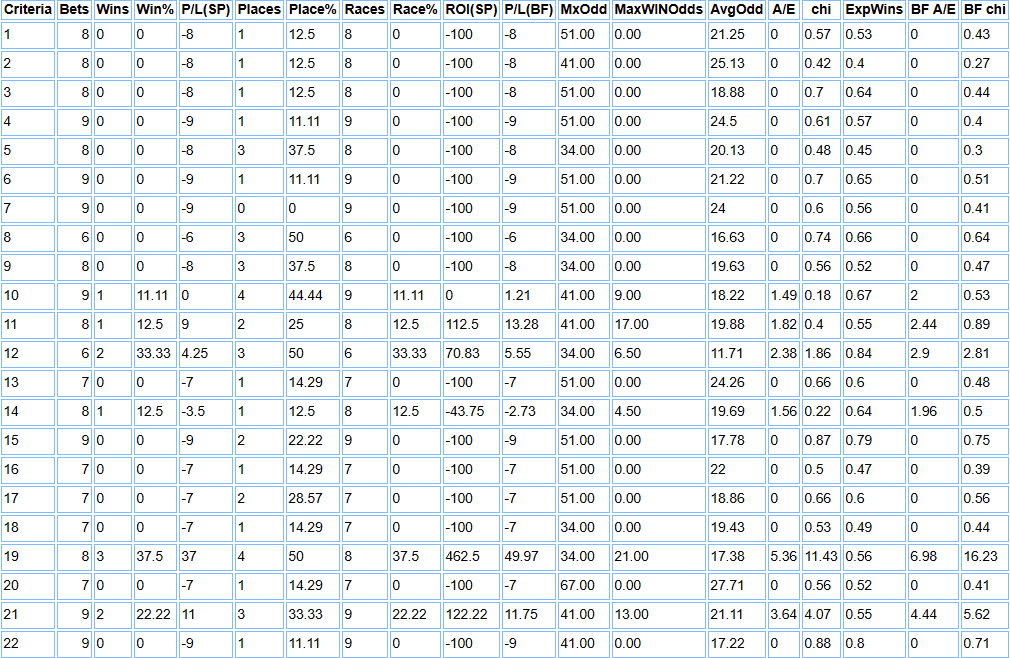
The draw has been significant. Those runners in a single digit draw having produced 0 winners from 73 runners 14 placed – The Exp/Wins should have been almost 5.
Compare their results with those drawn in stalls 19+ 5 winners from 33
runners 9 placed.
Last Time Out Placing
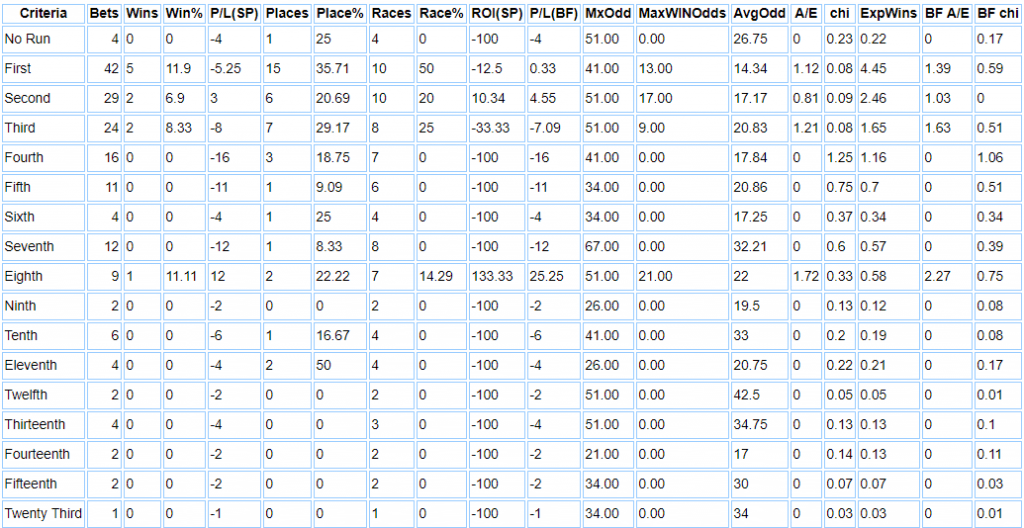
A top three finish in a horses last race has resulted in 9 of the ten winners. Those who finished outside the first three are 1 winner from 79 runners 12 placed whilst the Exp/Wins should have been 4.5.
Days Since Last Run
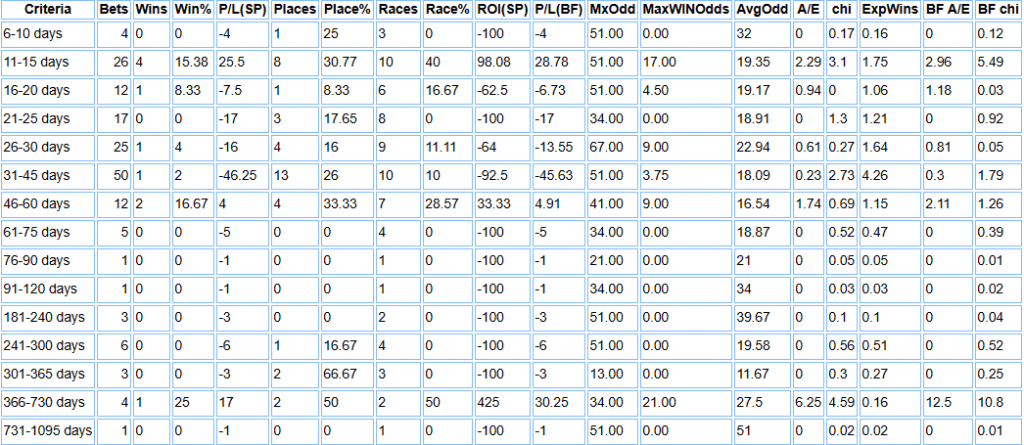
Those that run within the previous 11 to 15 days have produced the most
winners with 4 and are performing well above market expectations.
Official Rating
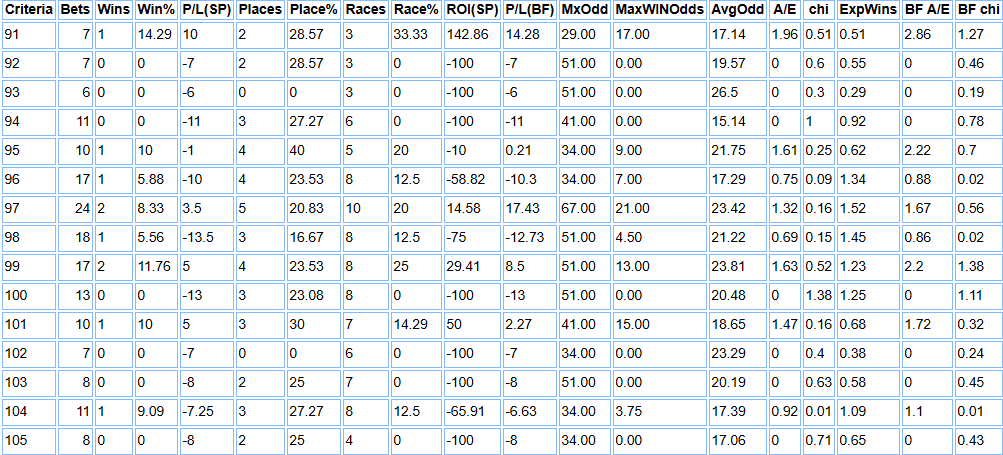
Nothing to significant here but 7 winners from 86 runners 20 placed were officially rated between 95 & 99.
Handicap Wins
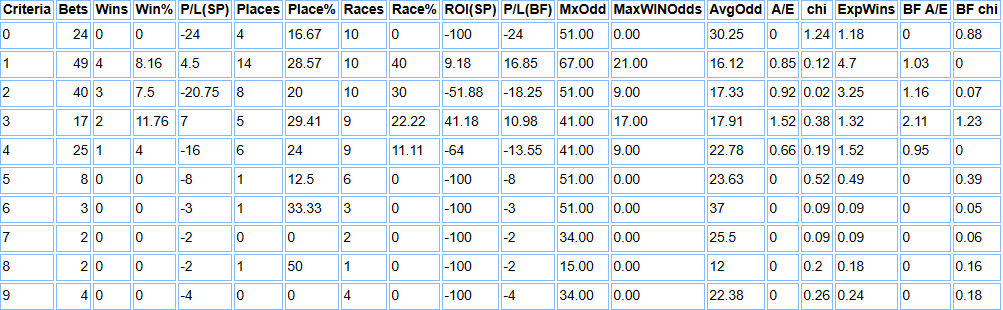
Seven of the last 10 winners from 89 runners 22 placed had won 1 or 2 handicap races previously.
Trainer Records
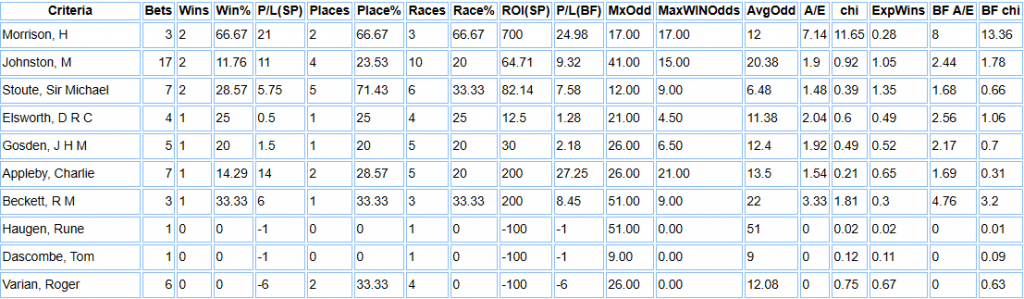
Three trainers have won the race twice in the past decade with Hughie Morrison, Sir Michael Stoute and Mark Johnson runners worthy of a more than a second look.
Duke Of Edinburgh Handicap Trends Verdict
It looks best to concentrate on horses aged 4 or 5 and that have had a top-three finish on their last run. Avoid runners drawn in a single figure draw which have been “coffin boxes” in recent seasons. Oh, and do not rule out any runners from the Hughie Morrison, Sir Michael Stoute and Mark Johnson stables.
- Age: 4yo or 5yo (10 winners)
- Draw: 10 + (10 winners)
- Last Time Out Placing: Top Three (9 winners)
- Days Since Last Run: 11 to 20 days (5 winners)
- Official Rating: 95 to 99 (7 winners)
- Handicap Wins: 1 to 2 (7 winners)
Looking at those six trends. I suggest that this year’s winner will need to meet 4 out of the 6 trends.
You can use those filters to cut down the field to small group of contenders before analysing race through form, speed, sectionals or whatever method you use.
It’s very simple, yet powerful, approach!
This article was first published in On Course Profits magazine, subscribe for free here https://www.oncourseprofits.com