
The Signal and The Noise – Book Review
I had a book recommend to me recently which sounded very interesting but I didn’t realise what a whopper it was. It’s two inches thick with 500 pages and very small writing.
So, I thought I’d try and share the key points from the book to save you having to read it yourself.
I’ve had a little help from ChatGPT to organise things into a sensible order.
It’s not about betting or how to predict winners, more about how to avoid making bad predictions from misinterpreting the data you have.
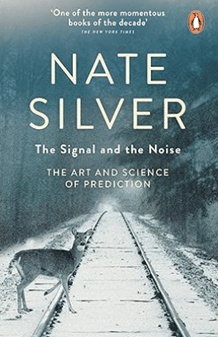
The book is The Signal and the Noise by Nate Silver.
“Most prediction failures do not come from lack of data or intelligence, but from confusing noise for signal, being overconfident, and failing to update beliefs properly when new information arrives. Good predictors think probabilistically, embrace uncertainty, measure calibration, and improve incrementally rather than seeking certainty.”
Nate Silver is famous for correctly predicting all 50 states in the 2012 US Presidential election.
The 8 Key Ideas That Matter for Betting
1. Most Information Is Noise
Markets are flooded with data, opinions, stats, trends, and narratives.
In betting terms:
- Tipster commentary
- Media narratives
- “Eye-catching” stats
- Small sample trends
- Recency bias (last run / last week)
Key insight:
Adding more variables usually makes predictions worse, not better. This is something we’ve covered before. Platinum readers may want to read 5 Factors to Improve Your Horse Race Analysis where John Burke explains why too much information reduces profitability and how you only need 5 factors to win!
Actionable takeaway:
Any model, system, or tipster that requires constant explanation is likely noise-heavy.
2. Overconfidence Is the Silent Bank Killer
Humans are systematically more confident than accurate.
In betting:
- “I’m sure this is a good thing”
- Over-staking after a winner
- Abandoning sound systems after variance
Silver shows that confidence rises faster than accuracy.
Actionable takeaway:
The most dangerous phrase in betting is “This can’t lose.”
3. Probabilities > Certainty
Good forecasters think in probabilities, not binary outcomes.
In betting terms:
- “This wins 30% of the time at 6.0” is rational
- “This will win” is emotional
Actionable takeaway:
Judge bets by price vs probability, not outcome.
A loser at value is not a mistake!
Value is everything, you know this.
4. Bayesian Updating (Quietly Critical)
The best predictors:
- Start with a baseline belief
- Adjust it slightly as new information arrives
- Never overreact
In betting:
- One bad run doesn’t mean the system has failed – Use the Longest Losing Run Calculator to get a realistic idea of if a losing run is within expected parameters.
- One good month doesn’t prove you have an edge
Actionable takeaway:
Change staking or confidence slowly, not emotionally.
5. Small Edges Compound, Big Predictions Fail
Silver repeatedly shows that:
- Complex systems resist big predictions.
- Small, repeatable edges outperform bold calls!
This maps perfectly to betting portfolios.
Actionable takeaway:
High strike-rate services keep the bank alive.
Outsiders move it forward.
Portfolios beat hero bets.
This mirrors what we already practice at On Course Profits.
6. Track Calibration, Not Just Profit
The best forecasters know:
- How often they are right at each confidence level
In betting terms:
- Do your 2.5 shots win ~40%?
- Do your 10.0 shots win ~10%?
Most punters never measure this.
Actionable takeaway:
If odds bands do not perform roughly as expected, something is wrong—even if you are currently winning.
7. Markets Are Efficient… Until They Aren’t
Silver is nuanced:
- Markets are usually quite good
- But they fail in specific, repeatable ways
- Especially where data is thin or incentives are skewed
Horse racing still offers:
- Fragmented info
- Human bias
- Illiquidity in certain races
- Mispriced outsiders
Actionable takeaway:
Look for structural inefficiencies, not clever opinions.
8. Narratives Are Not Evidence
Humans love stories. Markets price stories aggressively.
In racing:
- “Trainer in form”
- “Plot horse”
- “Target race”
- “Eyecatcher”
These can be real—but are often already priced in.
Actionable takeaway:
If a reason sounds good after the result, it probably wasn’t predictive.
If you plan to read this book, I suggest just focusing on these sections…
- Introduction – Sets the signal vs noise framework
- Poker chapter – Most directly applicable to betting
- Weather forecasting chapter – Calibration, probabilities, humility
- Early chapters on prediction failure – Cognitive biases that mirror punters
Darren Power