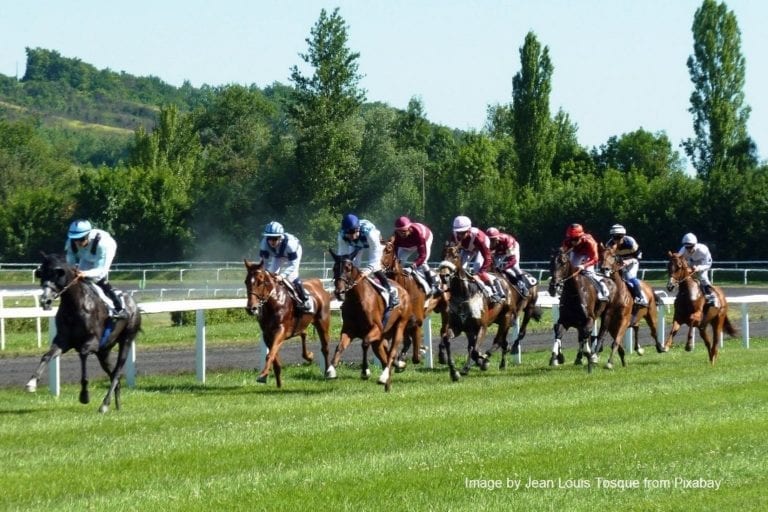

Hunter Chases
It has been ten years since I looked at Hunter Chases, so it seems a good time to revisit these races. From a personal point of view I have had less than ten Hunter Chase bets in my life, but it is a niche area that I am sure some people try to take advantage of.
Hunter Chases start in earnest in February although the first few races occur at the end of January. One of the problems with Hunter Chases from a punter’s perspective is that some of these horses contest point to point races as well. Therefore, it is worth being aware of recent point to point results where applicable.
For this article, when looking at past data, any ‘last time out' factors I am using have been linked back to their last National Hunt race, not their last point to point race. This is simply because I do not have a point-to-point database.
The data shared in this article has been taken from UK racing (2017 to 2024) with all profits and losses calculated to Betfair SP including commission.
Right, it’s time to get digging:
Market Factors
Let me begin by examining the market and market position.
I am basing this on the position of the horse in the Betfair market.

The less fancied runners, those fifth or bigger in terms of market position have nudged into profit, but these figures are badly skewed thanks to five winners of 100/1 or more, three of which were 190/1 or more.
In terms of those horses positioned fourth in the betting market, there were six 20/1+ winners which have again skewed the ‘positive’ figures a little.
I am more interested in the results for favourites and second favourites as their winning prices are too small to skew the figures and ultimately their combined losses have been small.
Hence, I decided to look at the course results for horses that were either favourite or second favourite to see whether there were any useful findings.
For a course to qualify I used 35 runners at the venue as a minimum:

Cheltenham and Stratford hold the most Hunter Chase races every year and interestingly they have provided the worst returns.
Ludlow has been the course that has seen the best results for favs / second favs and their A/E index stands at a healthy 1.03.
Age of Horse
Time to examine the ages of the horses now to see what that offers up.
Here are the findings:

This provides us with some excellent pointers, both positive and negative.
Horses aged 6 have a very good record and overall, those aged 6 to 8 look a group to concentrate on.
Once we get to 11 the performance starts to tail off markedly and I would suggest that those aged 11 or older are best avoided.
The eagle eyed amongst you would have noticed horses aged 10 have made a huge profit, but virtually all the big priced winners came in that group.
In fact, four of the five 100/1+ Hunter Chases winners during this time frame were aged 10 (the other was aged 9).
Going back to 6 to 8-year-olds, if you focused on those horses that were favourite or second favourite on Betfair their record reads 128 wins from 324 (SR 39.5%) for a BSP profit of £33.65 (ROI +10.4%).
Sticking with this age band and looking at Betfair price data, those starting BSP 14.0 or less won 161 times from 563 qualifiers (SR 28.6%) for a healthy profit of £102.02 (ROI +18.1%).
These BSP 14.0 or less runners have provided consistent results too producing a blind profit in six of the last eight years.
Country of Breeding
When looking at chases I always take note of Country of Breeding data as I know under some circumstances French bred runners offer an edge. I wonder if this is the case here.
It certainly seems that way once you have seen the figures below:

French bred horses have by far the best strike rate which has translated into a tidy profit. I can’t explain why this has been the case, but it is something that is worth being aware of if betting in these races.
Career Starts
Just to reiterate, when looking at number of career starts, this relates to past official NH races only under ‘rules’ and does not include point to points.
Here are the splits:

Horses with the least experience have done very well (4 races or less) and combining them together yielded a profit to BSP in seven of the eight years. The better performance for lesser experienced horses was perhaps to be expected given the positive figures for horses aged 6 to 8 we saw earlier.
Having said that 42% of the 0 to 4 career runs group were not aged 6 to 8.
In terms of negatives the more experienced runners (36 runs +) had the poorest record.
Again, this correlates positively with the poor performance of the 11yo+ group noted earlier.
Trainers
Trainer data is a little limited so here is a list of trainers that have saddled at least 30 runners during the time frame as well having at least one runner in 2024:

Several names in the list may be somewhat unfamiliar to you and therefore these figures should be extremely useful when analysing the chances of their runners.
Tom Ellis has been considered to be the best point to point trainer in the country for some years now and hence his record should not come as too much of a surprise. His excellent profit though is skewed by one big priced winner, but he is always a trainer to keep a close eye on in these races.
David Kemp is another high-quality point to point trainer who has made an overall profit in the last eight seasons. His more fancied runners have done especially well with those starting in the top four of the Betfair market returning an impressive 54 pence for every £1 bet.
Phillip Rowley is another point-to-point trainer who has performed well in these races in recent years.
His overall strike rate of one win in every three is outstanding and like Kemp, horses from the top four of the market have performed exceptionally well. These runners have secured a strike rate of 40.8% (20 wins from 49 qualifiers) for a profit of £33.15 (ROI +67.7%).
There are also some more familiar names in the list too including Paul Nicholls and Dan Skelton. These two have also proved profitable to follow to the tune of 13p and 43p in the £ respectively.
Finally, I would like to share a variety of other stats that I feel are worth noting:
- Horses who have not raced in a National Hunt race for over 90 days have produced some poor results. 176 wins from 1840 runners (SR 9.6%) for losses of £480.57 (ROI –26.1%). Those losses are steep.
- Jockey Gina Andrews has secured a £9.24 profit (ROI +10.9%) thanks to 20 winners from 85 rides (SR 23.5%).
- Jockey David Maxwell has won over 27% of his starts but his runners often go off at short prices. Hence, because of this, he has produced significant losses of over 38 pence in the £.
- The race type of their last National Hunt starts seems to make a difference as the table below shows:

As you can see it has been clearly preferable to race in a Hunter Chase LTO than not.
- LTO winners have turned a profit and their strike rate of over 22% has been impressive. Meanwhile horses that were pulled up last time have won just 8.5% of the time for heavy losses of over 27 pence in the £.
So, there we have it.
This article has offered up some interesting facts and figures that you should be able to make work in your favour for the remainder of this National Hunt season.
Firstly, you should keep an eye out for 6- to 8-year-olds and / or those horses that have raced four times of less in races under National Hunt rules.
Also, in terms of trainers, any runner from the stables of Tom Ellis, David Kemp, Paul Nicholls, Phillip Rowley or Dan Skelton are worth close scrutiny and could offer you a bit of value. Finally, French breds win more often than British and Irish bred runners.
I do hope you have found this article useful and potentially enlightening. I am hoping that if you have not considered betting in Hunter Chases before, this piece may have changed your mind.
David Renham